Kiyoshi Kobayashi Pdf Full ((new)) — Ukulele Jazz
 Description :
Personnel: George Strait (vocals); Brent Mason (acoustic & electric guitars), Paul Franklin (steel guitar); Steve Nathan (organ, synthesizer), Glenn Worf (bass); Eddie Bayers (drums); Curtis Young, Liana Manis (background vocals).
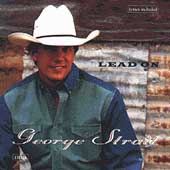
<p>Everyone loves George Strait. From country fans to rock critics, George Strait is singled out as the PURE country artist. On LEAD ON, his admirers have new reason to follow.
<p>His unadulterated country sound, awash in steel, fiddles and clean guitar picking, is swept by the deep waves of his distinctive Texas baritone. From the cajun dance beat of "Adalida" to the maxi-traditional "I Met A Friend Of Yours Today," Strait runs the gamut of tasty and tasteful country. No filler, no radio junkfood, just a lesson to all the wannabes, this is Country Music 101.
<p>"Nobody Gets Hurt," by Jim Lauderdale (a Strait favorite) and Terry McBride, is a contemporary country classic with an old-time bass shuffle that makes it sound warmly familiar. "Down Louisiana Way" sounds like a frisky Lucinda Williams cover. "The Big One" is classic Straitabilly, an unobtrusive marriage of rock and country. "Lead On" is a gentle ballad, with dead-on delivery and phrasing.
<p>Every cut is restrained, no excesses, but there's no holding back either. The tear in Strait's beer is as salty as any other country singer, and when he hurts you hear the sting. LEAD ON is like a greatest hits package: diverse, familiar, and of the highest quality. Only George Strait can pull off such a feat with ten new songs.
|
Track Listing :
|
Album Information :
|
|
UPC:008811109226
|
|
Format:CD
|
|
Type:Performer
|
|
Genre:Country - Contemporary Country
|
|
Artist:George Strait
|
|
Guest Artists:Steve Gibson; Stuart Duncan; Matt Rollings; Buddy Emmons
|
|
Producer:Tony Brown; George Strait
|
|
Label:MCA Records (USA)
|
|
Distributed:Universal Distribution
|
|
Release Date:1994/11/08
|
|
Original Release Year:1994
|
|
Discs:1
|
|
Recording:Digital
|
|
Mixing:Digital
|
|
Mastering:Digital
|
|
Mono / Stereo:Stereo
|
|
Studio / Live:Studio
|
|
Customer review - February 06, 1999
3 of 3 people found the following review helpful:
- An overlooked good record
George's Strait discography has always been consistently good. This CD was never much in light, but it is excellent, with even a few gems like the cajun-flavored "Adalida", and the moving "Down Louisiana Way" which were not included in his fabulous box-set. Buy and listen. Paul LeBoutillier 2 of 2 people found the following review helpful:
- Pretty good album that was overlooked
The first thing I noticed was this was the first Strait album with lyrics included in the liner notes, which was nice of them to finally do.
My favorite songs on this one are Nobody Has To Get Hurt and I'll Always Be Loving You. Both have solid melodies and choruses that practically force you to sing along. Nice, creative idea on Nobody. Lead On is very The Chair-ish, as both do great jobs at examining the initial stages of a relationship. You Can't Make A Heart delivers an impressive and overlooked message, and I Met A Friend relates a realistic scenario to the meltdown of a couple.
Adalida and Big One are songs that start to get away from him a few times, with Adalida being perhaps the only substance-free song on the album. George's weakest songs have always been at least listenable and above average. This applies to What Am I Waiting.
Overall, this is a solid album, but lacks the one gotta-have, instant-classic tune that many of Strait's other albums possess.
1 of 1 people found the following review helpful:
- One Of George's Best Albums.
I Like This Album. It Was Released In The Fall Of 1994. The Lead-Off Single "The Big One" Went Strait To Number 1. So Didn't "You Can't Make A Heart Love Somebody". The Title Track Is Also Another Love Balled. Buy This CD Today. - Great CD
I really enjoy George Straits music and I do intend to get more of them as soon as I can - A very good album for the most part
Kiyoshi Kobayashi Pdf Full ((new)) — Ukulele Jazz
Many players look for digital PDF versions of Kobayashi's books. There are several practical reasons for this:
These arrangements demand technical skill. To successfully play them, follow these steps: ukulele jazz kiyoshi kobayashi pdf full
In the global resurgence of the ukulele during the twenty-first century, the instrument has often been characterized by its accessibility, its bright timbre, and its association with folk and pop music. However, beneath the surface of mainstream popularity lies a dedicated cadre of musicians who have redefined the ukulele as a serious vessel for jazz improvisation. Among these pioneers, Kiyoshi Kobayashi stands as a monumental figure. For enthusiasts and students seeking to decode the complexities of jazz ukulele, the search for "Kiyoshi Kobayashi PDF" resources is a testament to his enduring influence. Kobayashi did not merely play jazz on the ukulele; he expanded the theoretical and physical boundaries of the instrument, leaving behind a legacy of transcriptions and arrangements that serve as essential texts for the modern ukulele instrumentalist. Many players look for digital PDF versions of
The specific search term "ukulele jazz kiyoshi kobayashi pdf full" highlights a shift in how jazz education occurs in the digital age. Kobayashi represents a bridge between the oral tradition of jazz and the internet era of instruction. Because his arrangements are highly sought after, digital transcriptions of his work have become holy grails for intermediate players. These documents are more than just sheet music; they are textbooks. By analyzing his rendition of standards like "All of Me" or "Fly Me to the Moon," students learn voice leading—how one chord moves smoothly to the next. Kobayashi’s transcriptions force the player to abandon basic "campfire" chords and embrace the mechanics of jazz theory, making the search for his PDFs a rite of passage for the serious ukulele instrumentalist. However, beneath the surface of mainstream popularity lies
: A pedagogical book focusing on improvisation, jazz theory, and blues scales. Where to Find the Books |

