









Always in sync, even across episodes
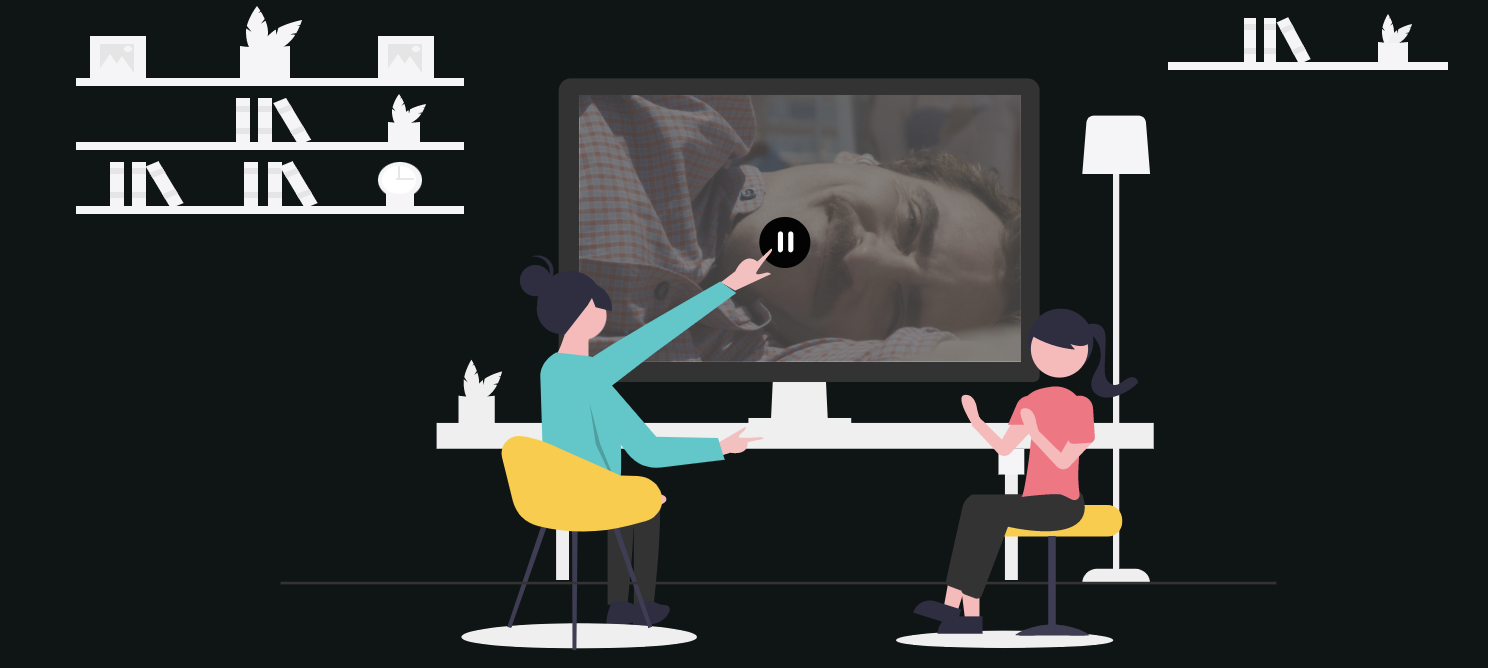
No more "wait, let me pause" moments. Our sync engine keeps everyone frame-perfect—even when you binge multiple episodes in one party.
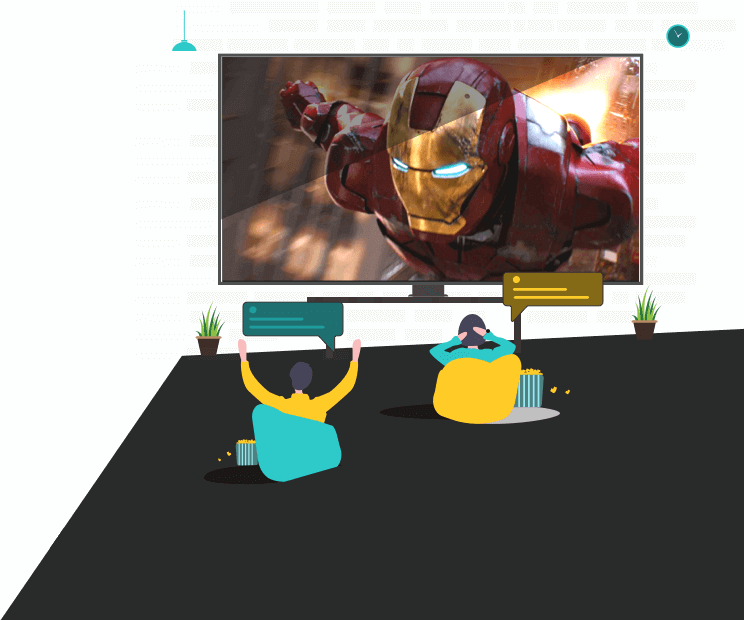
Start playing any video on Netflix, Disney+, or 10+ supported platforms.
Click the Flickcall logo on top right once video starts or hit the Flickcall icon on chrome toolbar. Your watch party is ready in one click.
Copy the party link and send it to your friends. They join with one click—no sign-up required.
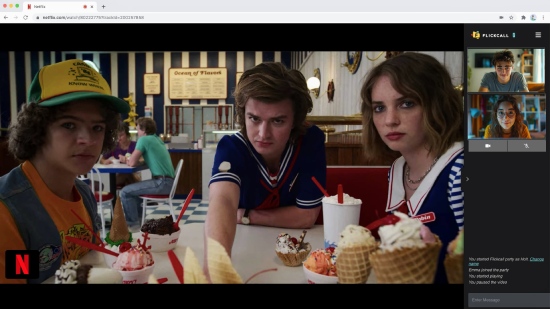
Create watch parties on Netflix, Disney+, JioHotstar, JioHotstar, HBO Max, MAX, Hulu, Prime Video, Youtube, Zee5, Sony Liv, JioHotstar with Flickcall.

No more "wait, let me pause" moments. Our sync engine keeps everyone frame-perfect—even when you binge multiple episodes in one party.

Catch your friends gasping at plot twists. Share laughter in real-time. Video chat makes every watch party feel like you're on the same couch.

Install the extension, play any video, click the Flickcall icon. That's it—share the link and you're watching together.
When you pause video, your mic unmutes. When you play, it mutes. Smart Mic knows when you need to talk. No fumbling with buttons, just natural conversation.
We use peer-to-peer technology to connect you directly with your friends. Your video calls and chats are never routed through our servers unless direct connection is blocked*.
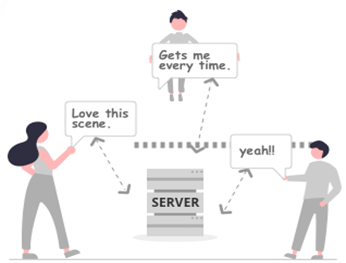
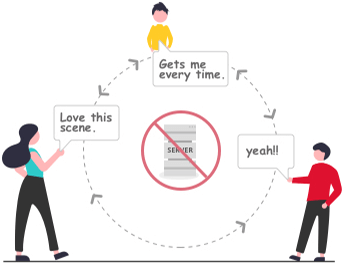
* In some cases, firewall setting doesn't allow direct connection, the calls and messages are encrypted and transmitted via routing servers.
The central innovation of Chabrol’s L’Enfer is making the camera complicit in Paul’s madness. Early scenes establish a conventional third-person perspective. However, as Paul becomes convinced that his wife Nelly is unfaithful, the film shifts to subjective shots that reveal what he imagines seeing—Nelly laughing with a guest, a hand on a shoulder, a door left ajar.
The Anatomy of Madness: Claude Chabrol’s L'enfer (1994) Claude Chabrol’s 1994 psychological thriller L'enfer (Hell) stands as a harrowing exploration of pathological jealousy and marital decay. As a founding father of the French New Wave, Chabrol spent decades dissecting the hypocrisies and dark undercurrents of the French bourgeoisie. In L'enfer , he turns his clinical directorial eye toward the ultimate internal prison: a mind consumed by unfounded suspicion.
Claude Chabrol’s (1994), titled in the U.S., is a haunting psychological thriller that explores the destructive nature of obsessive jealousy. Often referred to as "the French Hitchcock," Chabrol utilizes a masterful, clinical style to depict a man’s descent into madness within an idyllic setting. Production Background & Origins
Pathological jealousy, sexual obsession, and the descent into madness Synopsis
The central innovation of Chabrol’s L’Enfer is making the camera complicit in Paul’s madness. Early scenes establish a conventional third-person perspective. However, as Paul becomes convinced that his wife Nelly is unfaithful, the film shifts to subjective shots that reveal what he imagines seeing—Nelly laughing with a guest, a hand on a shoulder, a door left ajar.
The Anatomy of Madness: Claude Chabrol’s L'enfer (1994) Claude Chabrol’s 1994 psychological thriller L'enfer (Hell) stands as a harrowing exploration of pathological jealousy and marital decay. As a founding father of the French New Wave, Chabrol spent decades dissecting the hypocrisies and dark undercurrents of the French bourgeoisie. In L'enfer , he turns his clinical directorial eye toward the ultimate internal prison: a mind consumed by unfounded suspicion.
Claude Chabrol’s (1994), titled in the U.S., is a haunting psychological thriller that explores the destructive nature of obsessive jealousy. Often referred to as "the French Hitchcock," Chabrol utilizes a masterful, clinical style to depict a man’s descent into madness within an idyllic setting. Production Background & Origins
Pathological jealousy, sexual obsession, and the descent into madness Synopsis